Interview: John C. Lilly, M.D. (Part 1)

ch29#1

“YOUR GOD ISN’T BIG ENOUGH:”
An Interview with John C. Lilly

By MALCOLM J. BRENNER, FUTURE LIFE #20, August 1980

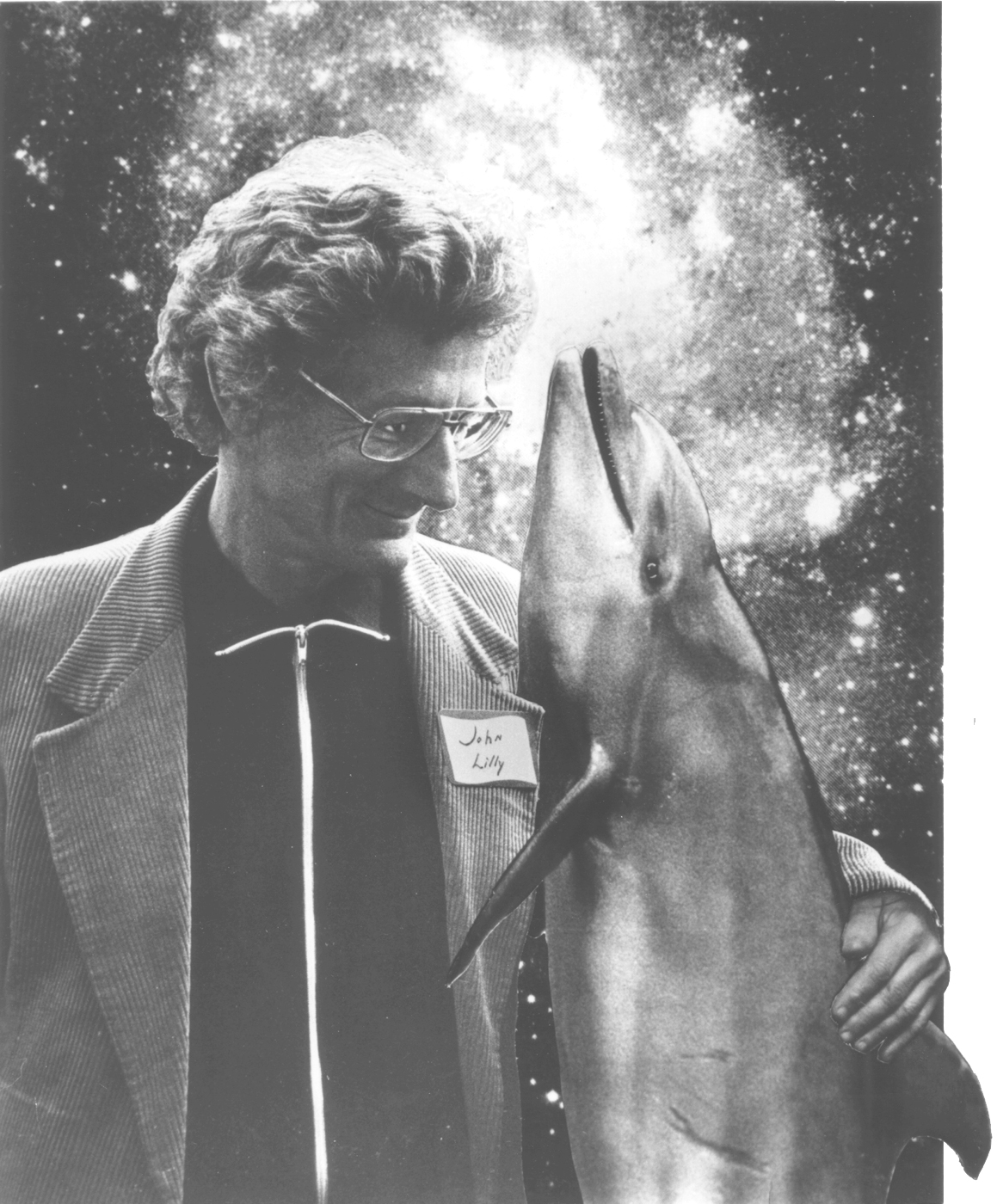
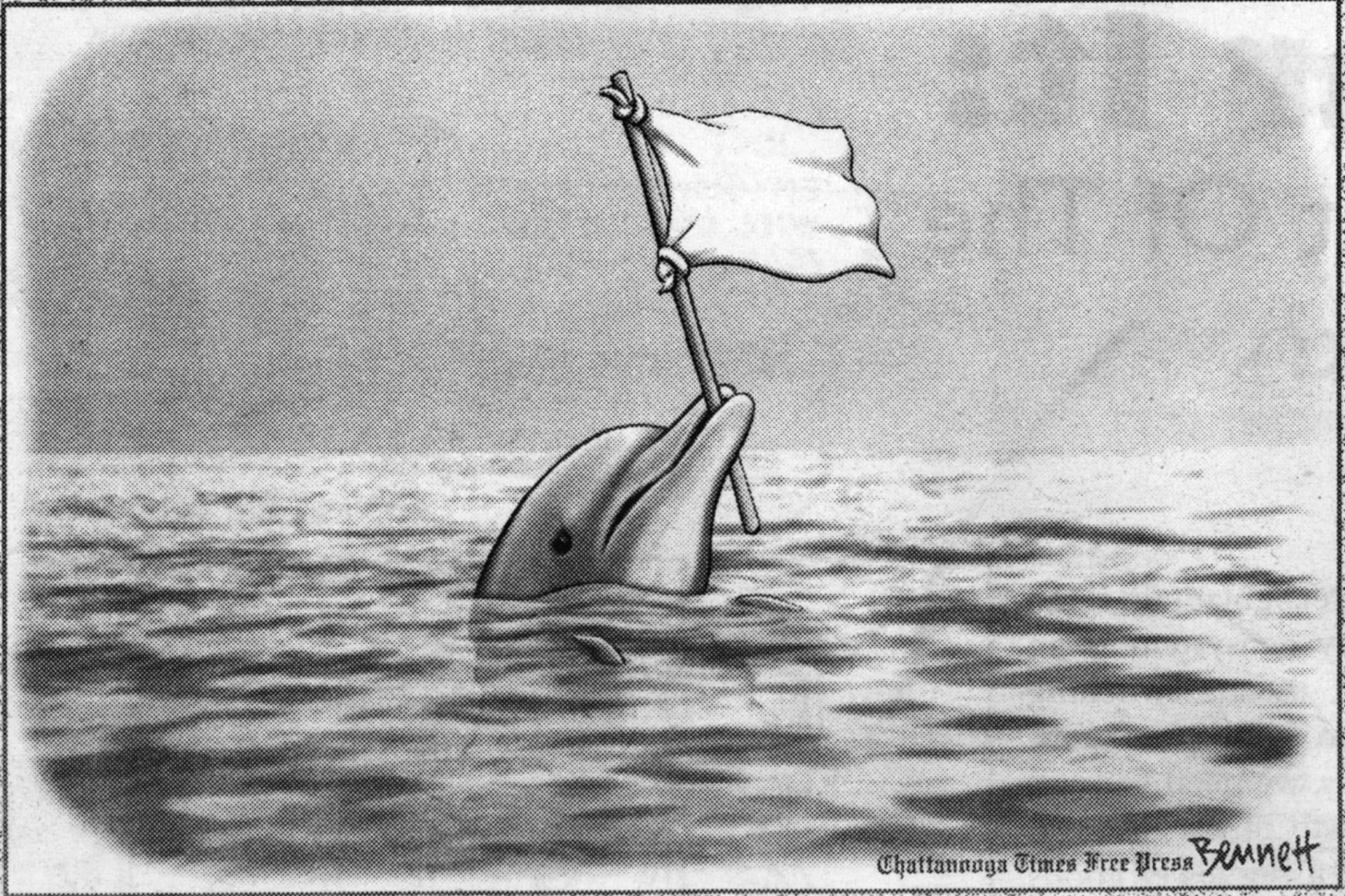
John Cunningham Lilly is that rare breed of scientist willing to talk openly about his belief in God—or, more precisely, his belief in his mind’s ability to simulate God with a reasonable degree of accuracy. An M.D. with psychiatric training, Lilly is best known for his sometimes controversial research on interspecies communications with bottlenose dolphins, a study he’s pursued for over 25 years (Man and Dolphin, Mind of the Dolphin, Lilly on Dolphins, Communication Between Man and Dolphin).

A self-described “permissionary” possessed of a sometimes dangerously insatiable curiosity about the workings of the human mind, Lilly has also immersed himself in sensory isolation tanks (Programming and Metaprogramming in the Human Biocomputer, The Deep Self), experimented with hallucinogens and Sufi mysticism (Center of the Cyclone), deep dyadic relationships (The Dyadic Cyclone with Antoinette Lilly), and explored the fringes of his own consciousness in The Scientist, a “novel autobiography. ” With Antoinette Oshman Lilly, his wife, partner and “soulmate,” he has started the Human-Dolphin Foundation headquartered in Malibu, CA.

Lilly is currently conducting tests at a California oceanarium on a new computer program designed to overcome the difficulties of human-dolphin communication, Project JANUS (Joint Analog-Numerical Understanding System). Dr. Lilly was interviewed during the Second Annual Mind Miraculous Symposium of the Church of Religious Science in Seattle.

MB: How did the sensory isolation tank work you did at the National Institute of Mental Health in the early ’50s lead you to the dolphins?
JL: I began that work at the National Institute of Mental Health, just wondering what would happen if you freed yourself up from a lot of external stimulation, and lowered all the inputs to the lowest possible level; what would happen to your mind under those conditions? It was just curiosity, just that sort of extracurricular activity one does in one’s general research; they didn’t even know I was doing it on my own time. I was working on monkey brains, and I’d go off to the tank and come back to the lab with a different perspective.

When they got wind of this, they asked me to get deeper into it. I was floating around in the tank in 1954 and started wondering about these things. I was beginning to find that my freedom of thinking was immensely increased, freed up from the necessity of temperature and gravity and light and sound and all that. There was this huge freedom of imagination, of experiencing things inside, which isn’t there any other way that I know of. And I was just wondering whether there wasn’t somebody floating around 24 hours a day their whole life who might be experiencing this all the time, and who would consider it absolutely normal.

So I began to talk to various people about dolphins, Pete Scholander and various others, and got interested. And then the brain thing came in, looking at their brains, seeing if the substrate for mind was there. And it was.
MB: When you were doing that early tank work, did you have any of the type of apparent “contact” experiences with other civilizations or creatures from other planets or dolphins you wrote about in Center of the Cyclone?
JL: No, there was a period there from ’54 to ’58, when I left NIMH, where the dolphin work and the tank work were overlapping. I began to see that the dimensions of mind were far greater than I’d been assuming they were, and were assumed by psychiatrists and psychologists. And I didn’t own up to it at the time it was happening. I didn’t own up to it until I was free to set up a tank in the Virgin Islands without all this government support and financing.

In fact, none of the tank work was ever directly supported by government grants; it was all done extra-curricularly. And I didn’t realize how important it was until I began to see how my thinking was changing as a consequence of these experiences, and the kind of vastness of the whole business. The mysteries of the mind… I was really immersed in them. And I began to see that the dolphin mind was probably far greater than our consensus reality allowed our minds to be. That’s why I want to communicate.
MB: In the early ’60s, you got a lot of publicity from media like Life and Newsweek, and there was a big surge of interest in the possibility of interspecies communications with dolphins. Did that make your work more difficult? Did it make other scientists more skeptical of you because you’d “gone public” before your results were confirmed?
JL: That was unplanned; the results began to come out in sources like The Journal of Acoustical Research & Engineering, and the media got interested. They were reporting on what we were doing; we weren’t seeking them. Now, as to what you mean by “other scientists,” I don’t know.
MB: Other marine mammalogists.
JL: Well, I’m not a marine mammalogist. Never have been. I’ve never been a cetologist or a delphinologist in the narrow sense that those people call themselves. I’ve never approached dolphins that way; I’ve always approached them from the standpoint of mind. They won’t even assume dolphins have a mind, so right off the bat we’re in entirely different domains of discourse. I’ve never felt that conflict they’ve felt; it’s their conflict, not mine.

MB: Between the period in 1968 when you released your dolphins and the beginning of Project JANUS, did you get discouraged about your dolphin research?

JL: Well, the time wasn’t right. The computers weren’t fast enough, small enough, and didn’t have large enough memories to do the job I wanted them to do.
MB: Between Aristotle in 350 B.C. and the resurgence of dolphin interest in the ’50s, due largely to your work, we have a terrible gap in our curiosity about these creatures. Why? How did we lose that closeness with the dolphins that the Greeks and some other ancient peoples had?

JL: The Mediterranean was much warmer in the time of the ancient Greeks, and they were much closer to the sea. And Aristotle was, I think, a kind of observing genius who got in contact with fishermen and people who were in close contact with the dolphins. And they must have had dolphins in captivity, caught in shallow pools or something like that, and they just were free with them, spoke to the dolphins, and the dolphins spoke back. It was this intimate contact, which we reproduced in experiments back in the ’50s and ’60s, which led to Project JANUS. In the modern oceanaria there isn’t much of this. It’s beginning, but it’s not there yet.
It’s shallow-water intimacy with the dolphins. Humans in deep water are pretty ineffective; dolphins in extremely shallow water are pretty ineffective, but you have to balance those two things together, and I think that just by chance the Greeks did that.
If you follow the history of humans since then, they got away from that, away from the sea. They stuck to deep water when they went to sea, and this tidepool thing just disappeared. The whole attitude—the belief systems and so on—were counter to it. The Jewish-Christian-Muslim ethic took over, and we totally moved away from that free-floating thing the Greeks had. The interest in dolphins as reincarnated humans and all that disappeared.
MB: One point Robin Brown makes in his book The Lure of the Dolphin is that, in terms of their morals and their scruples, the Greeks actually placed the dolphins above their own gods! One can detect a lot of the same thing in your writings—that there is a morality in the dolphins that prevents them from harming humans, under most circumstances.

JL: Ethics. It’s taught. The Greeks worshipped dolphins; they had a dolphin cult. Temples to them were found in the Negeb desert in Jordan, for instance. It was a very, very different socialized belief system which disappeared. And the modern point of view, which we started going after, was just sort of empirical approaches to them based on all sorts of considerations the Greeks didn’t have, such as their large brains, their behavior in captivity—those sorts of things.
MB: Do you think the Greeks kept dolphins in captivity for religious purposes?
JL: Yeah, I think that the original Delphic oracle, before the gal who was breathing vapors from a vent in a volcano, was probably a seaside thing that was never written up, in which certain people began to use dolphins speaking in air as oracles—spiracle oracles, you might say. But that’s speculation.
MB: You said earlier that you weren’t expecting a “breakthrough ” at this stage of Project JANUS. Is it fair to ask what you are expecting?
JL: A lot of hard work, one step after the other. For a while we’re going to have to be really restrictive, because it’s going to be a lot of hard work by a very few people. It’ll be a while before we can get our feet on the… get our feet wet. We don’t talk about “getting our feet on the ground’’ any more.
MB: What level of communication do you think you can achieve with the equipment you now have?
JL: I don’t know; that’s open-ended. Imagine starting out with humans, say, somebody that didn’t know your language, with the JANUS program. Now, in the JANUS software there is a program which chooses alternate tables of frequencies; one for the dolphins, based on their frequency discrimination curve, and one for humans, based on ours, and we’ve been working with humans on this. Turns out that there are new gestalts that develop. For instance, if you type H-E-L-L-O and activate JANUS, it comes back with the frequency for H, and the frequency for E, the frequency for L, and repeats it, and the frequency for O. This makes a little tune. And that word has been used so many times around the lab that everybody knows when the computer’s saying “hello!”
MB: Like the tones on a touch-tone phone?
JL: No, it’s not, because the touch-tone phone is designed so you can’t do that. Each button has two tones, so a pure tone won’t affect it; they’re fouling you up on that. It doesn’t have the clarity it would if they were pure sine waves. The basic idea is quite different, actually. What does the phone have—12 buttons?—of which we only use 10 for normal dialing. And we have 48 buttons, each one of which gives you pure sine waves, and each of which you can remember, without trying to untangle multiple frequencies. So you’re hearing pure tones the way you would keying a synthesizer with only one oscillator instead of three.
MB: But you type in ”hello” and what comes out is a characteristic tune?
JL: A gestalt, right. An easily recognizable acoustic gestalt. It looks as though we will be doing a very peculiar job, which reminds me of Herman Hesse’s Bead Game in Magister Ludi, in which they’re combining mathematics, logic and music in a very complex game. And that’s what we’re doing, really—developing a whole new vocabulary in the acoustic sphere which is representable by ordinary typewriter script. John Klemmer came up and started playing with it, and he wants to write music this way. So now you can type out music on an ordinary typewriter. For instance, we worked out what that theme they used in Close Encounters of the Third Kind means, where they start communicating with the aliens. You have these five notes. Well, it turns out that on the JANUS program those are S, U, Q, B and K.
MB: Not much of a message…
JL: Yes it is, because anybody who’s seen CE3K recognizes it instantly. So you’ve got all these new degrees of freedom in the acoustic versus the symbolic typing. For instance, we can type out a very long message on JANUS, put it through a phone line, bring it back into JANUS, and JANUS will type out what those sounds mean.
MB: Why did you decide on a computer system, rather than a frequency-shifting real-time vocoder, as described in Mind of the Dolphin?
JL: I wanted a system that is more easily, reliably reproducible than a human talking.
MB: Punch a key on the computer and you always get the same sound out the other side?
JL: Right. It’s an elementary approach where you have a chance of learning new things about the dolphins’ perceptual systems. Then you can eventually design something that’s much more sophisticated, based on the basics you discover with this approach.

It’s what you might call a survey apparatus. You’ve got a general purpose computer you can reprogram; general purpose interfaces you can reprogram through the computer so the voice can be reprogrammed, the ear can be reprogrammed. So you can try different approaches. We’re initially starting with pure sine waves as the output to the dolphins, from about 3,000 to 40,000 Hz., and varying the duration. We’ve had to modify our initial guesses to match their frequency-discrimination curve a little better. We may then add clicks, continuous FM whistles and tones.
This is just the initiation, the opening-up of the whole field. JANUS is the first system that has total round-trip feedback, where the computer has a voice and ears, instead of dictating to the dolphins, as some other researchers are doing. They ignore what the dolphins have to say, mainly because they don’t have the sophisticated approaches that allow the computer to hear and interpret the sounds.
MB: Will the computer have a memory system that will allow it to build up a vocabulary of dolphin sounds?
JL: Not initially, though we will be building that up through the transitional symbolic vocabulary. We’re starting with 48 symbols, which is a sufficiently large population so we can get a large number of different strings. English has 44 phonemes in it. That should appeal to the dolphins; they like long strings and complex strings, a great variety of sound. And we’re covering their frequency-discrimination curve where they’re best at it, the way English covers the human curve.
MB: So the objective of JANUS is to set up an intermediary language between humans and dolphins?
JL: Yeah. Now language… we’ve set up a code system to develop any number of languages, and we’ve tried to arrive at a reproducible standardized system, which you can’t do with a vocoder, because of the variations in individual voices… yet vocoders have degrees of freedom this doesn’t have. The vocoder will respond to different kinds of voices, and the dolphins will answer in different voices. But here, we’re requiring a rather narrow slot in performance on their part, which we can record and follow.

So at one end of the spectrum you have this rather rigid system we’ve devised, and at the other you have a somewhat more flexible system. We’ll probably meet in the middle somewhere, so there’s more flexibility and it’s more like a voice.
MB: Now, if I were a dolphin inputting into JANUS, would I have to input in the same pure sine wave tones JANUS puts out to me?
JL: Well, we had a gal who put a pair of headphones on—we used the human scale on this —and she had a Moog synthesizer, the keys on it marked like a typewriter, so you can tell just what you’re typing out. She was typing things in, listening to the tune, then singing it back into JANUS through a microphone. And she could make the transfer; she would type out words on the synthesizer, hear them, then with her own voice sing to JANUS, and JANUS would type out the same thing. But she’s an expert singer.
MB: So you don’t anticipate nearly as much trouble on the dolphins’ part as it would be to phonate in air, as you were doing earlier?

JL: Oh, no, this is all underwater. Though they have started to phonate in air, mimicking JANUS’s output. Apparently they’re eager to learn.

MB: Have you received widespread public support for Project JANUS?

JL: Enough. We’ve always had just enough.

###

Read Part 2

On the Subject of UFOs…

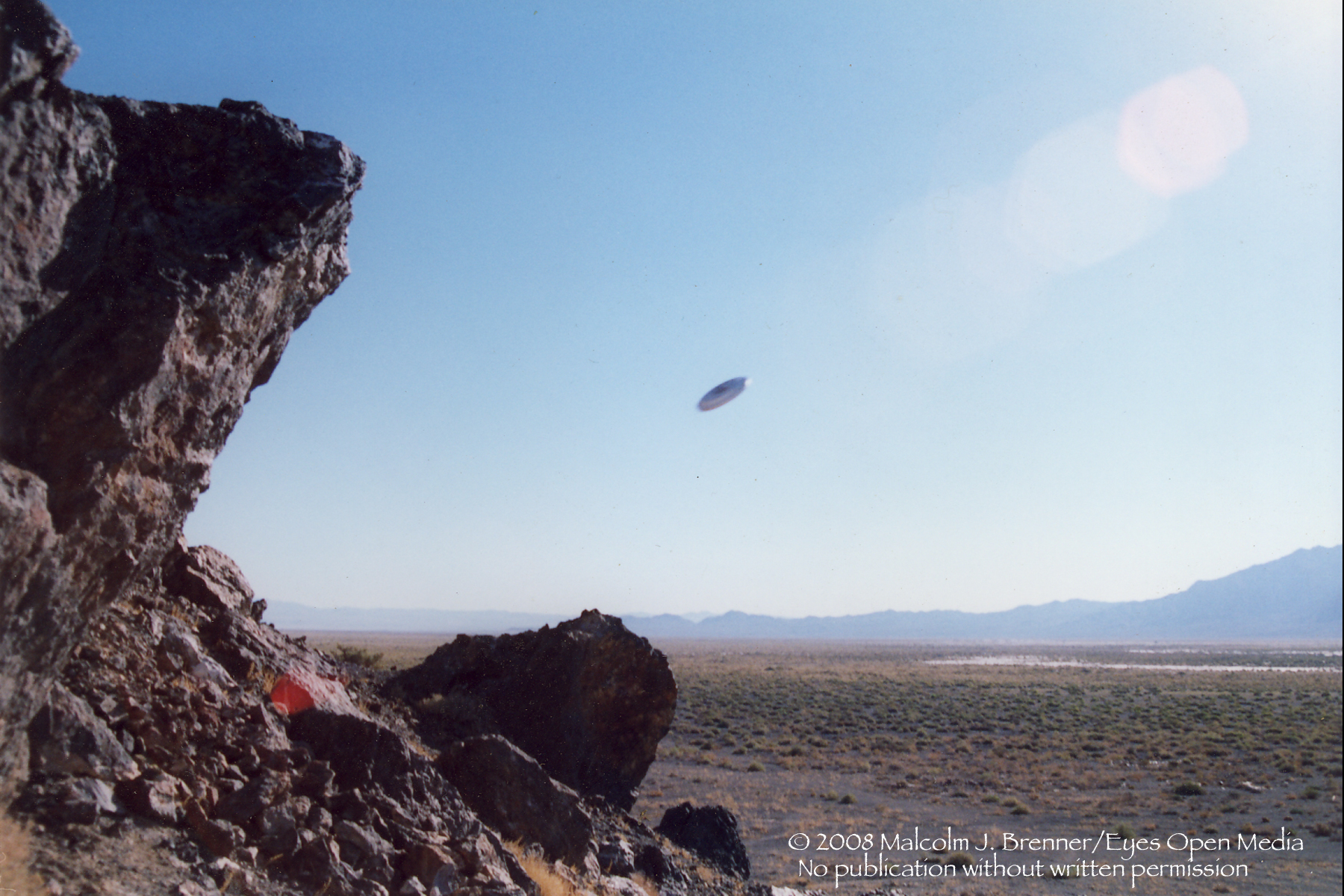
desert UFO

(ABOVE: Is it REALLY a flying saucer? Wouldn’t you like to know! But hey, doesn’t that sun flare look great?)

…Why schlep a bunch of water around the Universe, or between the Worlds?

I inherited my interest in “the dodgy subject of UFOs,” as Jimi Hendrix so aptly put it, from my father, the radar engineer. He was a fucking brilliant man who could sit down with a mechanical pencil, a slide rule, a couple of yellow legal pads, a pack of Camels and a bunch of reference books and design the electrical circuits for your radar set!

This is an intellectual feat of which I am utterly incapable. My mind just doesn’t work that way, and to my regret it never has. I am not that organized, numbers do not speak to me and I have trouble visualizing (my way of understanding) how electricity works. The differences between voltage, amperage and resistance elude me. My talents lie elsewhere, and they are not those of my father. I shoot better photos than he ever did, and I’ve written three books, pretty good books I’d say, one of which may outlive me, which he never presumed to do. I guess he had no stories of his own to tell. Mine are clawing through my chest to get out.

When I was very young, my father, having served honorably in the U.S. Army Signal Corps in World War II operating a radar unit on fucking Iwo Jima, as soon as the Marines got done cleaning it up, continued to work for the Army as a civilian after the war. He helped design the Missile Master, the first radar-guided, computer-controlled anti-aircraft missile system in the world, and this was when computers that were only four-bangers filled whole trailers with their vacuum tubes, and another trailer with the air-conditioning system required to keep the vacuum tubes from melting under their own heat.

His name was Millard Maxwell Brenner. It had been Cohen, but he and his younger brother, on the advice of his professors at MIT, changed it because they warned him that with a Jewish name like Cohen he’d never go anywhere in the electronics industry, no matter what his skills. My father was a realist; he didn’t have an axe to grind, and gave in to what then must have seemed like the inevitable. It wasn’t like the government wanted to tattoo a number on his arm, after all!

When I was about 5 I became aware that on his bookshelf there were a number of books about UFOs, which were a much more interesting subject in the 1950’s or 60’s than they were in the 1970’s or 80’s. These included Edward Ruppelt’s The Report on Unidentified Flying Objects, M. K. Jessup’s The Case For the UFO, and Sir Desmond Leslie and George Adamski’s rather more dubious Flying Saucers Have Landed, among others. And as I grew up I read them. My father had an open mind; he wouldn’t have been doing his job as a radar engineer if he hadn’t been interested in “angels,” as anomalous returns were then called. So he remained non-comittal about the subject, but he did acknowledge, years ahead of the scientific establishment, that the Universe was probably full of habitable planets and life. Earth, he assumed, must be run-of-the-mill for habitable planets; there probably wasn’t anything special about it, given the law of averages.

So that is how I came by my lifelong interest in the dodgy subject. I inherited it.

Most recently my thinking on the subject has evolved rather quickly, inspired by both the work of cybernetician and astronomer Jacques Vallee, and by the real-life events that led me to write my most recent novel, Mel-Khyor: An Interstellar Affair. Vallee is famous for having started his career as an associate of Dr. J. Allen Hynek, and writing his first two books in support of the extra-terrestrial hypothesis (ETH) as being the likely origin of the UFOs. That didn’t last long. He quickly developed not only a number of questions about the ETH, but a skeptical attitude toward the groups providing researchers with “channeled” information (expressed in the very memorable Passport to Magonia, which ought to be the title of a TV series based on Vallee’s life and investigations. You wouldn’t have to fictionalize it nearly as much as Project Blue Book does to Hynek’s!).

What Vallee had noticed was something that also attracted the attention of American folk-lorist and UFO researcher John Keel: The reported close encounter of the 3rd kind (CE3K) with a UFO was functionally identical to many of the tales of religious experiences, demonic encounters and visits to the land of the “shining people” or the Sidhi, as the Celts called them, one encounters in Medieval literature, and earlier writings. It raised a number of questions about the phenomenon and the encounter experience which the ETH utterly failed to answer. I will not detail them here, as Vallee has done a great job of that in his books.

This made a lot of sense, and up until 1993, when I met the woman I identify as “Susie Louise McGonagall” in Mel-Khyor, I was convinced that UFOs were as much paranormal as mechanical. Susie’s story of a crashed alien spaceship and its humanoid occupant, who was very much flesh-and-blood (to the point of having consensual sex with her several times during his stay), landed with a lot of weight, partially because I was familiar with the person who told it.

And, as the years passed and different opportunities presented themselves to check aspects of the story out, I did. The decision tree always broke in Susie’s favor, but I could never prove anything; I just couldn’t disprove it conclusively! Nothing ever contradicted her memory of events, and that story is told in Mel-Khyor. It is so much a nuts-and-bolts event (pardon the pun) that it seems to argue strongly for the extra-terrestrial hypothesis. So I found myself examining it in the light of Susie’s reported case, and the evidence for the origins of UFOs to be paranormal, or, more specifically, multi-dimensional. It may be that we are limited in what we can accept is “normal,” but I really doubt the existence of the supernatural. There are simply realms of nature with which we are as yet strikingly unfamiliar.

What do I mean by “multi-dimensional”? Nothing woo, nothing about “vibrations” or “higher awareness.” Time for some geometry! We inhabit what is commonly referred to as a 3-dimensional world, because you need a minimum of 3 coordinates to locate an event or object in space: width (X), height (Y), and depth (Z). But this description is incomplete, because our universe contains an extra dimension, but one in which our movement is restricted to one direction only!

I refer, of course, to TIME. You can’t leave that out of the description, because in addition to an object’s coordinates in space, you also have to mention when you’re talking about, because if you forget to specify what time, you end up in an episode of Dr. Who, where one time is as likely as any other!

So we seem to live in a 4-dimensional universe, but is time really an extra dimension? It has the unique property that it’s the only dimension in which we have no freedom of movement. Our trajectory, if not our destination, is determined at conception. We move from young to old, from life to death, from low entropy to high, from now ’till then. Perhaps time is not fully a dimension, but a fraction of a dimension intruding into the matter universe. One can imagine a creature that is as free to move about in time as we are in space, but as many science-fiction writers (notably Robert Silverberg, see The Masks of Time and Up the Line) have mined this vein to death, I’ll let it lie.

So when I write about a multi-dimensional being, I mean one from a universe where more than 4 reference points are needed to locate an object or event. That’s all… it sounds simple, but think about it for a moment. If you move a line at right angles to itself you get a plane, and if you move a plane at right angles for itself you get a cube. But how, in our space, do you move a cube at right angles to itself? It already has all the angles that fit in our universe!

I guess you move it in time, but I have no idea how to do that, other than waiting.

What does this have to do with higher dimensions? Just this: UFOs behave in our world not as if they were real objects, but as if they were merely 4-dimensional projections out of a higher dimensional world. As projections, they don’t have to obey the rules of our universe, just appear to at their discretion! They can accelerate instantly, decelerate the same, turn upside-down or any direction, shrink, expand, appear, disappear, change shape or penetrate solid matter because they have no mass, and no inertia. It is not until they choose to interact with us that they become “solid,” as we understand the term, i.e. where all the electron probability shells in all the atoms of this world remain intact when objects meet.

Because UFOs seem to have this ability of themselves, I believe humans are the victims of sleight-of-hand on a cosmic scale. Since the beginning of time we have been dealing with the occupants of the UFOs, in all their multi-species glory: the Annunaki and the Greek Gods, the Grays and the Nordics, the Reptoids and the Mantis Beings, etc. These sock puppets have distracted us from the real intelligence behind these multiple masks: THE VEHICLES, THE UFOS THEMSELVES!

Consider this: human beings and all life forms on Earth are made of protoplasm, and protoplasm is 70% water. Is protoplasm a good repository for memory? Well, until we developed electronic memory, it was all Nature could come up with! That doesn’t mean it’s ideal. Compared to solid-state memory, the central nervous system, brains and all, is delicate, over-designed, fussy, demanding, requires a complex support system (the body) and careful programmatic instruction (we call it education) to yield optimal results. Even when it’s operating right, it’s subject to subjectivity, the limitations of its evolved senses, environmental influences and distractions, disease, aging and ultimately death, if senility doesn’t wipe it out first.

Compared to solid state memory, hardly ideal.

So, if you are a race of beings with the power to control what we laughingly refer to as “reality” in all the ways the Visitors (to use Whitley Strieber’s term for them) do, it kind of begs the question:

WHY SCHLEP AROUND A BUNCH OF WATER, WHEN YOU CAN JUST SCHLEP AROUND ITS MEMORIES AND THE INFORMATION IN IT?

What we should assume, then, is that after we sight a UFO, any interaction with it occurs in an altered state of reality where the usual laws of physics appear to be suspended. But does this reality have to be our reality? Are abduction experiencers really transported through closed glass windows, even solid walls? Not if, like a stage magician, you don’t have to break the laws of physics if you can simply convince someone that you have.

This doesn’t mean that the Visitors are, in any sense of the word, unreal, or that the abduction experience is in any way distinguishable from a real event. “In the province of the mind, whatever one believes true either is true or becomes true, within certain limits. These limits are to be determined experimentally and experientially,” said Doctor John, the Night Tripper — I refer to Dr. John C. Lilly, M.D., of course, the bastard father of interspecies communications.

What it means is that any interaction with the UFO or its occupants can be interpreted as being manufactured on the spot to order. It’s the UFO itself that’s yanking our chain, not the aliens it disgorges. They’re just so much window dressing, like all the hangars, workshops, control rooms and operating rooms inside UFOs are. Whether they are real or not is a moot point in investigating the experience, because the abductee is convinced by the immediacy and weirdness of what she sees, hears and feels that everything is real, from the cold steel table under them to skinning their knuckles punching an alien jaw.

When the abduction event is over, the interior rooms disappear, and the Visitors themselves are debriefed and sucked back into the UFOs memory, to be recalled as necessary. Thus, the UFO can be entirely solid-state when traveling between stars, or when it interpenetrates our universe. The needs of a crew constructed of bone and protoplasm need not be considered, greatly simplifying the requirements of the vehicle-operator!

This realization, that UFOs are themselves a multi-dimensional solid-state intelligence capable of manifesting all the physical events of the UFO encounter or abduction experience (at least in such a way that the abductee is overwhelmed by them), is, I think, as far as I can carry my analysis. Having reduced the CE3K encounter to its simplest explanation, I can go no farther, unless some other idea comes to mind.

Well, there it is, but what does it mean? It means we can disregard the multiplicity of alien species appearing on our planet and look at the experience itself, on the common factors between all UFO encounters. Perhaps the use of lights, which UFOs use in the same manner as bioluminescent squids: to attract their prey! There is no reason why UFOs cannot approach someone without giving away their presence, as indeed they often do, but the colored lights hanging in the sky silently command our attention in a way nothing else can.

Where does this leave me with regards to Mel-Khyor? I’ve always said that in our observations of the UFO, we are probably confusing several phenomena, like really unusual ball lightning, sprites and cold plasmas, secret government black-ops recon projects, alien spaceships and perhaps even multi-dimensional beings. One hypothesis doesn’t rule out the others! Susie’s story about Mel-Khyor may be true, or it may be an elaboration or a complete fantasy, but if she made it up she was lucky, and struck the truth without meaning to an unusual amount of times.

I think this elaboration gives us a handle to understand CE3K events, and especially the abduction event, in a new light. Once we accept the established fact that the UFO itself represents an intrusion on our reality, it becomes wise to carry the thought to its logical conclusion, which is what I’ve tried to do. I hope I’ve made myself clear, even though my expression of the ideas here is somewhat clunky or clumsy… if I had more time, I would have made it shorter!

Have a nice day, keep one alligator length apart for social distancing, and, in the immortal words of Kevin McCarthy in 1956’s Invasion of the Body Snatchers, KEEP WATCHING THE SKIES!”

(Oh, and that photo at the top of the article? It’s a Frisbee I painted silver and threw in the desert with one hand while I snapped the camera with the other. Sorry, when I get a picture of a real UFO, you’ll be the first to know it!)

Who Do You Trust?

Prologue

(Photo: Dolly, a dolphin I once knew, and yes, I mean that in the Biblical sense.)

{Photo © 2011 by Malcolm J. Brenner. All rights reserved.}

An Essay at the Request of the

Beautiful Cadaver Project of Pittsburgh,

but it was rejected for the anthology because “it didn’t fit with the other pieces.” Gee, I wonder why?

[As it turns out, I can only find this, for some reason, in .pdf format for now, and since I don’t have a .pdf >.txt converter, let me try this.]

Who Do You Trust

If you’ve got an opinion about this piece, I’d really like to hear it. It challenges what it means to be human! Please leave a comment. Thanks.

Dropped

surrender
I give up!

The Holroyds, that brother-sister UK couple who wrote The Perfect Pair trilogy, just sent me a “Dear John” letter.

For those of you unfamiliar with the lingo of WWII GI’s, a Dear John letter was a letter from your girl friend telling you what a great guy you are, and how she’s glad you’re defending her freedom, but while you were overseas fighting The Hun or The Yellow Menace or The Gooks, she met this really nice guy who isn’t being drafted because he has bone spurs, and now he takes her to tennis matches in his convertible…

…in other words, blowing you off. Well, that’s what the Holroyds’ have done, when they realized I’m really a ZOOPHILE.

Just for the record, the New Oxford American Dictionary defines a zoophile as “A person who is sexually attracted to animals.” Yeah, that’s me. I’ve been married twice, mostly successfully (I’m sure my daughter would like to think so), because I was able to expand my definition of acceptable partners to include women, the human species of female that comes into season more often than any other mammal on Earth.

In addition to having nice, smooth skin free of fur or bristles, women can drive cars (despite what they say in Saudi Arabia), raise children (often with a man’s help), balance check books (some of them) and perform other useful household functions that will puzzle a dog or even a cat. Don’t leave home without one!

I don’t go out of the way to advertise the fact that I’m a zoophile, but I don’t try to hide it either, because I’m lousy at lying, hiding or disguising anything. I wear my heart on my sleeve, where it belongs.

I also could fault the Holroyds for not reading Wet Goddess, or watching Dolphin Lover before they adopted me to carry their standard, but what’s the point? It’s kind of moot, now. They need me like another hole in the head.

I never figure on being a professional outcast.

Swimming with Orcas, N.Z.

This drone footage, taken by Dylan Brayshaw, is a remarkable record of wild orcas swimming peacefully, even curiously, with an unidentified red-head swimmer (Lucy, is that YOU?).

It is one of the most amazing pieces of video I’ve ever seen.

It proves unequivocally that to make orcas kill humans requires the abuse of captivity.

Please watch this and think about what must be going on in those huge, complicated brains. Then tell your Congress person or senator to pass a law banning the capture or killing of dolphins and orcas in U.S. territorial waters. They deserve it. Thanks!

(All footage © 2018 Dylan Brayshaw, all rights reserved)

COVID-19 SPECIAL: I MUST BE CRAZY!

Print

Yes, friends, it’s true! I must be CRAZY to offer not one, but TWO – COUNT ‘EM, T-W-O – books for this low, low price!

That is, two low, low prices.

Here’s one:

Growing Up in the Orgone Box: Secrets of a Reichian Childhood, normally $6.99, now at 60% DISCOUNT, your price $2.80 through April 30, 2020.

I wrote this book about my childhood, which was weird and horrible for a very, very strange reason: MY PARENTS BELIEVED IN SOMETHING THAT DOESN’T EXIST.

Sound a lot like religion, right? Maybe something especially odd, like Asatru, Scientology or Ten-ri-kiyo?

It was something even worse than that: A PSEUDO-SCIENCE. With the trappings of religion. Especially since the founder, a rogue Austrian psychiatrist and dropout of the Vienna Freudian school named Wilhelm Reich, became, in the eyes of his followers, a martyr to the cause of free investigation. He has the distinction of being the only person I’ve heard of whose books, research, instruments and products were seized by order of a federal judge, transported to an incinerator on Long Island and burned.

Six tons of them. Reich had quite a prodigious output. None of it what anyone who knows what real science is would dare call “science.”

I’m not going to get into any more than this about Reich and his awful legacy. Just read my story and know that in my youth, I not only suffered from a nearly fatally narcissistic mother, but I was sent to one of the most evil men in the North America, if not the world – FOR THERAPY!

Read all about it, what happened to him and the events leading up to my experience with the dolphin, in this book. CAUTION: Harsh language, gross stuff, domestic violence, poop, body-building, masturbation and bestiality are part of the story. YOU HAVE BEEN WARNED! “Trigger” accusations will be stridently rejected!

wet-goddess-cover

Here’s the other:

Wet Goddess: Recollections of a Dolphin Lover, normally $6.99, now at 30% DISCOUNT, your price $5.60 through April 30.

Hey, if you don’t know what this novel is all about, you probably shouldn’t be here, unless you came to learn, then welcome! Enjoy browsing on the foliage, or scenery, as you prefer. Refer to this.

All thanks to Smashwords’ AUTHORS GIVE BACK sale, which has inspired this compassionate, stunning feat of selfless generosity! They are a great outlet for self-published authors whose work’s too hot for Amazon!

E-book prices slashed!

This slideshow requires JavaScript.

From March 1 until March 7, you, Dear Reader, can buy my two ebooks from Smashwords for half price! Why, that’s almost 50% off! 🙂 Both titles temporarily marked down from $6.99 to $3.50 in honor of nothing in particular, just that Smashwords gives all their authors a chance to do this every year, and I’d be a sucker if I didn’t take advantage of it!

The titles are, the novel Wet Goddess: Recollections of a Dolphin Lover and the childhood memoir Growing Up in the Orgone Box.

Smashwords Global Coupon Code: ZJ74D

Why Smashwords? Well, when I published Wet Goddess in 2010, they were the only ebooks publishing site that would accept “bestiality” — provided it was between consenting adults of both species, of course.

Nevertheless I’m in their debt, because the publisher fought hard to prevent the major distributor of ebooks from dropping the entire Smashwords lineup. So he got my second book as well, and a third ebook of Mel-Khyor: An Interstellar Affair is in the offing!

I think a lot of my critic’s problem lies in their not believing that a creature like a dolphin can exercise free will, or, being female, can experience libido, or can change her behavior on the apprehension of a thought. But they can do and feel all these things.

I’m looking into new ways of exploring the dolphins’ world without getting wet, specifically Remote Viewing, the information-gathering technique used by the U.S. military and the CIA in the 1980’s to spy on Soviet military objectives, allegedly without the Soviets being aware of it. Scientists are, of course, skeptical of any kind of out-of-body experience, but I’ll perform some tests and judge for myself, thanks.

So hurry, get out your charge card — er, your cell phone — and get two of my books for the price of one! They won’t last long at this price!

WARNING!

Both of these books contain unusual sexual situations which some people may find objectionable, and Orgone Box in particular contains scenes of adults committing physical, sexual and emotional abuse on a child (me). I don’t believe in “being triggered,” because people are not Colt .45s who walk around half-cocked, as my father, a GI in WWII, used to say, but Godz forbid somebody should accuse me of doing that because of the content these books! You have been warned, okay? If you’re easily offended, don’t buy them and then complain about the subject matter. You have been warned!


Thought For The Day

“One of the great challenges in life is knowing enough to think you’re right, but not enough to know you’re wrong.” — Nick GT on The Joe Rogan Show.

Galileo & Lovecraft

HPL-fishy1

“I submit that the Bible is the inerrant word of God, but it is not a textbook on astronomy!” Galileo Galilei to the Inquisition, 1630 or thereabouts.


We live on a placid island of ignorance in the midst of black seas of infinity, and it was not meant that we should voyage far.  H. P. Lovecraft, “The Call of Cthulhu,” 1928.

Of the Gods, #1

Do gods write holy books?

Or do they inspire humans to write holy books?

I think that’s hardly a challenge, for a real god!

No, gods write the genetic codes for humans who write books.

Now that’s a challenge worthy of a god!


“Ray, when someone asks you if you’re a god, you say yes!”

– Winston Zeddmore (Ernie Hudson) to Raymond Stantz (Dan Akroyd)Ghostbusters, 1984


Sayings of Chairman Malcolm

group of persons wearing yellow safety helmet during daytime
Photo by Pixabay on Pexels.com

“Political power grows out of the barrel of a gun.” – Chairman Mao Tse-Dong


Maybe so… but that gun has the greatest power when it remains in the holster.