Hey Gang — a recent Google search for Marco Pereyma, a very advanced fine-arts photography student I encountered my freshman year at New College of Florida (1969-1970), led me, like Indiana Jones finding the buried ruins of Lucasfilm, to this story in the NC newspaper Captain Jack, vol. 1, #8, Jan. 12, 1970. For you arithmetically challenged, that’s more than 53 years ago!
The King of the Blues made quite an impression on me; I think the only concert I’d ever been to before that was some kind of charity benefit featuring a very down-home Eric Von Schmidt and his acoustic guitar, and if you know who HE was, aside from a local Sarasota talent, you’re the new nominee for Hipster Supreme! (Hint: He painted the only authentic painting of Custer’s Last Stand, based on the actual battlefield terrain and the testimony of survivors. [Sioux survivors, that is!] It made the cover of Smithsonian Magazine, and Eric told me that I have the only photos of him creating it! Woo-hoo!)
This concert was long before B. B. was being celebrated as an all-American musical icon in the Mainstream (read “white”) Press. I’ve wracked my brains trying to remember when I first heard about heard about him, and I can’t. That title — “The King of the Blues” — seemed mighty ambitious, maybe even a trifle presumptuous, but at the end of the show I was ready to bow down and acknowledge His Majesty, and his queen, Lucille (which if you’re not up on your B. B. King mythology was the guitar he always played, because it saved his life of several occasions! He wasn’t into trashing his instruments, like, say, The Who did, every performance. Generally speaking, Black musicians in that period couldn’t afford to, and weren’t inclined to!)
Why do I refer to Marco Pereyma as “a very advanced fine-arts photography student”? Well, several reasons:
- He shot with a Nikon F 35mm SLR. It was Stanley Kubrick’s favorite still camera, it was very hip, it was indestructible and the lenses were so sharp the camera came with spare Band-Aids in the box.
- Marco never consulted a light meter, he just set whatever lens opening and shutter speed he needed for the light conditions and adjusted the film development accordingly. This resulted in some very weird negatives!
- These he then printed on Agfa Brovira #5, a type of B&W enlarging paper so contrasty it made everything look like a visit from Mormon missionaries. There was black, and there was white. Shades of gray? What are you, a Communist?
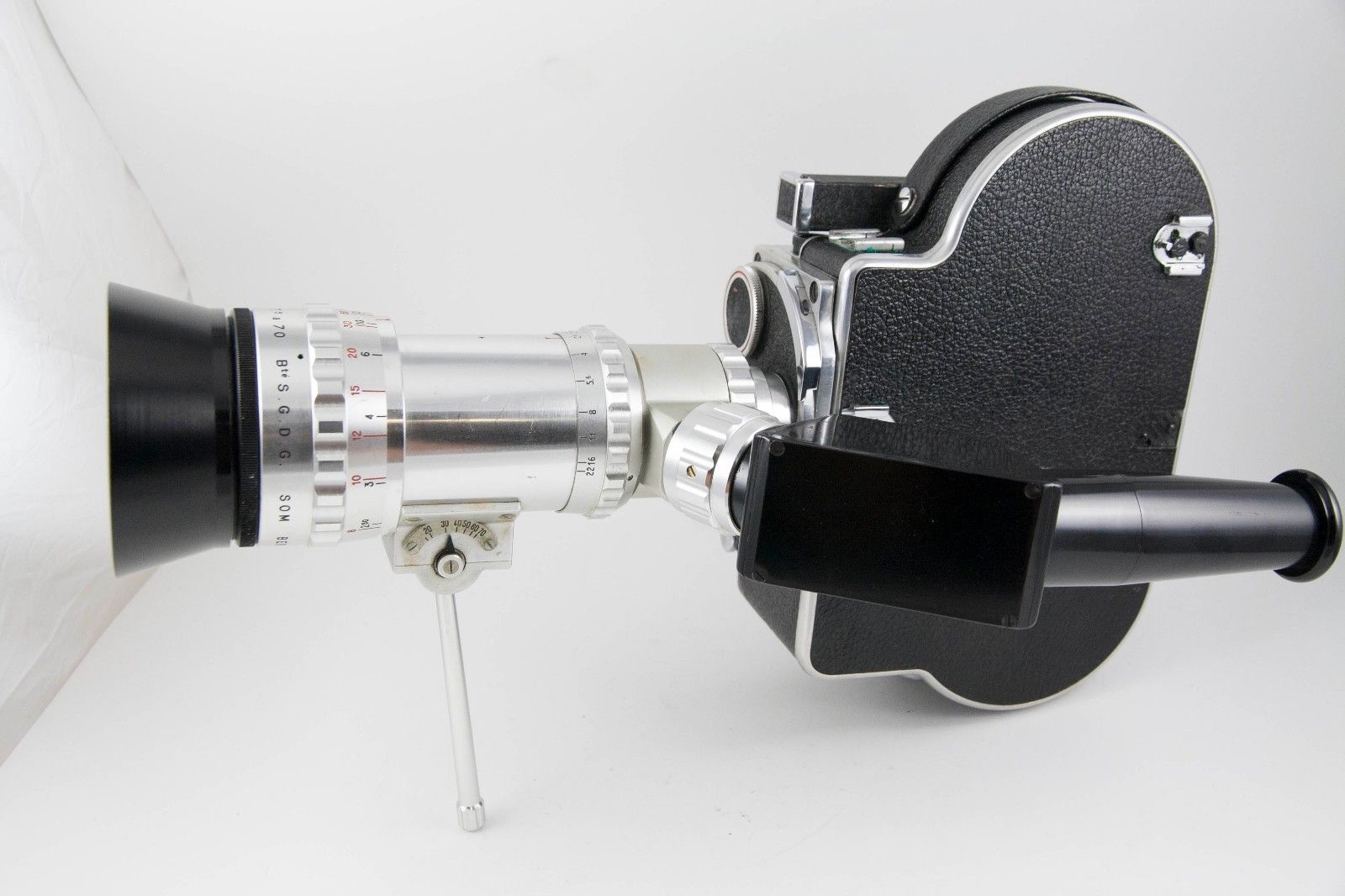
- Professor Herb Stoddard, who was apparently the ONLY faculty member at NC qualified to judge photography, LOVED Marco’s photos and praised him extensively! Except for the few who failed his classes, Stoddard gave the rest of us one-word evaluations: SATISFACTORY. No more, no less. Satisfactory! That was what my father paid $10,000 tuition a year for, and YES, THAT WAS SOME BIG MONEY BACK THEN! If I’d gotten smart advice from my mother, I’d have accepted the FULL SCHOLARSHIP I was offered from Cornell and asked my dad to spend some of the difference on a good 16mm. movie camera, maybe a Bolex R5 or a Beaulieu RPZ-16, and a tripod. But my mother didn’t give me good advice, she was more interested in hurting my father than my getting an education.
- Marco was one of the most striking persons, physically, I ever met. He made an indelible impression on you: tall and toothpick-thin, with a shock of almost-albino hair and the coldest, hardest, bluest eyes I’d ever seen to that time. And I felt that way until I met Philadelphia futurist and murderer Ira Einhorn, and saw his eyes, like two oysters on the half shell, on ice, in a bar.
- Finally, although I cannot remember her name, Marco had a small, cute and incredibly attractive girlfriend who’d pose in the nude for him! I’m sure Professor Stoddard loved his photos for that reason, too! And you knew they were getting it on, because she smiled at everyone, and Marco moved with the grace and stealth of a big cat. Which I suspect he was.
Marco was so talented, I wonder whatever became of him? Why didn’t he enter the ranks of great American photographers, beside Richard Avedon, Margaret Bourke-White and Gordon Parks? Did he get sucked into the meat-grinder known as Vietnam, or did he simply lose interest in his grainy Tri-X film, his fisheye lenses and his sexy girlfriend model?
Does it matter, now, after more than half a century has passed? Yeah, it still does. You have to hang on to people, to grab them as the current swirls them by and rope them to you somehow, so you don’t lose them downstream, over the falls. That was unlikely to happen with Marco, as both his manner and his methods left me cold. I was always looking for the shades of gray between the black and the white. But my search did yield a great review I forgot I’d written, and a couple of pictures of the immeasurably talented Mr. King himself, so I guess it was worth it, huh?
 Malcolm J. Brenner